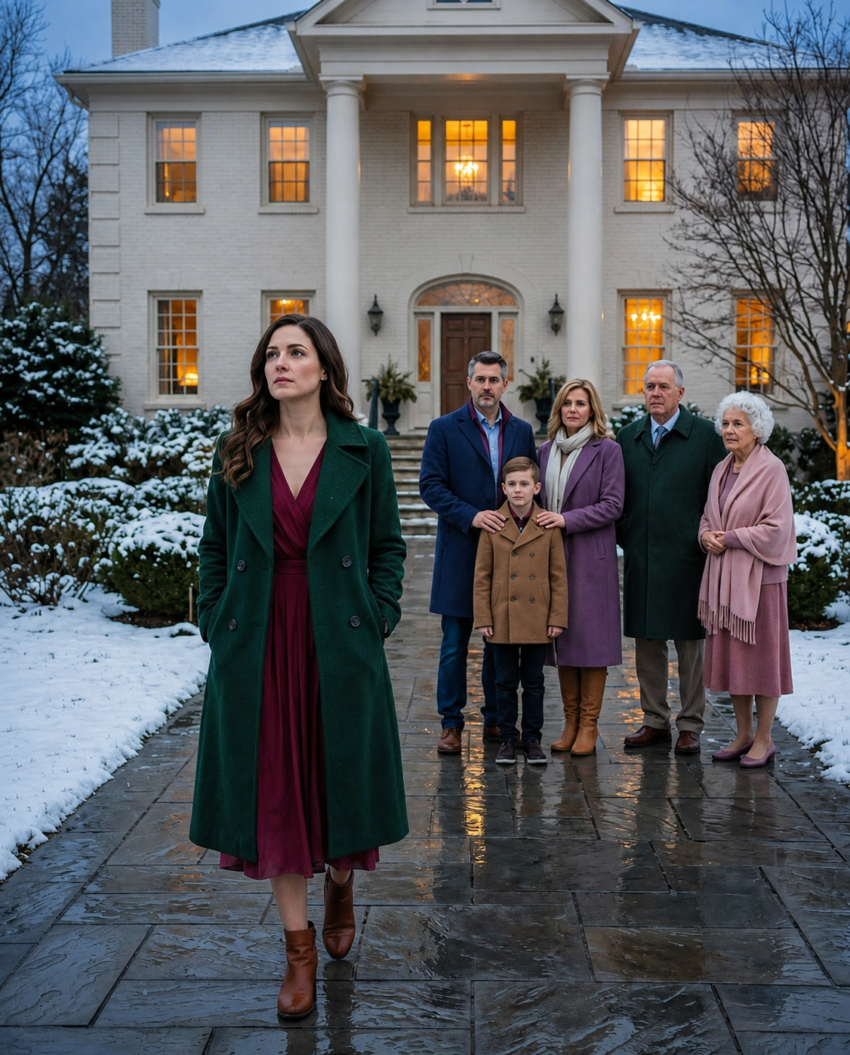
My older brother looked me over outside the country club and laughed.
“Wait… you’re delivering food here now?”
His friends laughed with him.
My parents turned around, and the disappointment on their faces was almost worse than my brother’s joke.
I simply smiled.
Then I pulled out my phone and made one quiet call.
Less than five minutes later, the people who came outside made my brother’s smile disappear.
My name is Allison Carter.
I’m thirty-one.
And I hadn’t spoken to my family in nearly two years.
The last words my father ever said to me were simple:
“If you leave this house today, don’t expect to come back.”
So I left.
One suitcase.
One backpack.
And no plan except to prove to myself that I could survive without their approval.
The beginning was rough.
I rented a tiny apartment near Asheville and worked whatever hours I could get. Most of my money went toward rent, bills, groceries, and debt.
But somewhere along the way, I discovered real estate.
I wasn’t interested in glamorous mansions.
I liked neglected properties.
The ugly buildings everyone else ignored.
I studied foreclosure laws, attended courthouse auctions, learned renovation costs, and spent countless nights teaching myself everything I could about property investing.
My first deal barely made a profit.
The second one did better.
Then another.
Eventually, I owned several small hospitality businesses through separate companies.
I kept my name out of the spotlight.
That was intentional.
Then one winter, one of my companies became the primary sponsor of the Lake Ridge Children’s Foundation Gala.
And the gala was being held at the most exclusive country club in our county.
The same club my family belonged to.
The same club where they had always made me feel like I didn’t belong.
I arrived just before sunset.
I was wearing a simple black evening dress and modest heels. I had no expensive jewelry, only my grandmother’s old watch.
Beside my SUV sat an insulated delivery bag.
Inside were customized gifts for the donors.
I had delivered them myself because it was faster.
That was all my brother needed to see.
Connor looked at the bag.
Then at me.
Then he laughed.
“So this is what you’re doing now?”
His friends chuckled.
“Delivering food to country clubs?”
My mother looked away.
My father folded his arms.
Connor smiled.
“You know there’s a service entrance around the back, right?”
I gave him a polite smile.
“Thanks for letting me know.”
He laughed again.
“I can show you where the kitchen is if you’re lost.”
I said nothing.
Instead, I reached into my purse and took out my phone.
Connor rolled his eyes.
“What? Calling your supervisor?”
“No.”
“Then who?”
“Someone who’s expecting me.”
He scoffed.
“Sure they are.”
“They are.”
I made one call.
It lasted about ten seconds.
“I’m here.”
A pause.
“Perfect. We’ll come outside.”
I put my phone away.
Connor shook his head.
“Still pretending you’re important.”
Dad sighed.
“Enough. Let’s go inside.”
They turned toward the entrance.
Then something happened.
Less than three minutes later, the main doors opened.
Four people stepped outside.
The charity chairman.
The club’s general manager.
The regional director.
And the evening’s master of ceremonies.
They walked straight past my family.
Straight toward me.
The chairman smiled.
“There you are!”
“We’ve been waiting for you.”
He reached out his hand.
“Ms. Carter, everything is ready.”
“We’d love for you to officially open tonight’s event.”
The parking area went completely silent.
Connor’s smile vanished.
My mother stared at me.
My father looked confused.
Connor finally managed to speak.
“What is going on?”
The chairman glanced at him.
Then back at me.
And calmly said:
“I don’t believe your family has met the new owner of Lake Ridge Country Club.”
Connor’s face changed instantly.
Because six months earlier…
I had purchased the entire club.
The Joke Suddenly Wasn’t Funny
Nobody moved.
For a few seconds, the only sound was the fountain near the entrance and the distant beep of a golf cart.
Connor gave a nervous laugh.
“Owner?”
He looked at the chairman.
Then at me.
“You mean… she?”
“Yes,” the chairman replied.
“Ms. Carter.”
The club manager immediately asked two employees to collect the insulated bags beside my SUV.
Connor watched the attendants take the same bag he had been making fun of.
His expression slowly collapsed.
Dad finally spoke.
“You bought this club?”
“One of my companies purchased it.”
His eyes narrowed.
“You own this place?”
“Yes.”
My mother whispered my name.
“Allison…”
I hadn’t heard her say it in almost two years.
It felt strange.
Not comforting.
Just unfamiliar.
The chairman continued explaining the evening schedule.
“We have the press area prepared, and the foundation committee would like a photograph before dinner.”
Connor interrupted.
“This has to be some kind of mistake.”
The chairman looked directly at him.
“No mistake.”
Then he added:
“Ms. Carter handled the acquisition negotiations personally. The purchase was completed in June.”
My father went completely still.
June.
That was the same month he had returned the birthday card I sent him.
He hadn’t even opened it.
The Family History They Pretended Never Happened
Inside the club, everything looked different from the last time I had been there.
The old carpeting was gone.
The floors had been refinished.
The heavy brass fixtures had been replaced.
An unused room had become a reading lounge for children.
The board originally hated that idea.
Now they proudly showed it to visitors.
My grandmother’s watch rested against my wrist.
She was the only person in my family who had ever made me feel capable.
Her name was June.
She wasn’t sentimental.
She was blunt, stubborn, and impossible to intimidate.
When I was fourteen, she took me to look at a run-down duplex she owned.
She told me something I never forgot.
“Everybody wants the pretty property. The real opportunity is usually the ugly one with good bones.”
I remembered those words when I started investing.
My father remembered a different version of me.
To him, I was the daughter who refused to accept the safe accounting job he had arranged.
He called my real-estate plans reckless.
I called his idea of success a life designed by someone else.
The argument happened in their kitchen.
Connor was there.
Mom was cleaning plates that were already clean.
Dad finally pointed toward the door.
“If you leave tonight, don’t bother coming back.”
He expected me to cry.
Instead, I packed.
I filled one suitcase.
Grabbed my backpack.
And somehow carried a ridiculous yellow lamp out of the house with me.
That lamp stayed in my first apartment for years.
It reminded me that leaving had been my decision.
The Secret My Family Never Discovered
The ballroom was already filling.
Guests were drinking champagne while staff arranged the donor gifts.
The gifts included leather journals, engraved pens, handwritten notes, and small cedar boxes made through a local woodworking program.
Nothing extravagant.
Everything meaningful.
Connor remained near our parents.
My mother eventually approached me.
“You never told us about any of this.”
I looked at her.
“You never asked.”
She had no answer.
Dad stepped closer.
“If this is some attempt to embarrass us…”
I almost laughed.
“You really believe this entire event was planned because of you?”
Before he could answer, the club manager returned with a black folder.
“Your attorney also asked me to mention that if anyone requests private ownership information again, security has instructions to handle it.”
I looked toward Connor.
He suddenly became very interested in the floor.
“You were checking,” I said.
He shrugged.
“People were talking.”
“About me?”
He didn’t answer.
Then the manager handed me the folder.
Inside was something unexpected.
An envelope.
My name was written across the front.
I recognized the handwriting immediately.
My grandmother’s.
She had been dead for nine years.
For a moment, everything around me seemed to disappear.
The manager explained that the envelope had been discovered inside an old safe during renovations.
My attorney had instructed them to give it to me privately.
I slipped my finger under the flap.
Then my name was announced from the stage.
I closed the envelope.
Work first.
Grief later.
What I Told Three Hundred People
I walked onto the stage.
Three hundred guests turned toward me.
My family sat near the back.
Dad looked furious.
Mom looked nervous.
Connor looked like he wanted to disappear.
The master of ceremonies introduced me with far more praise than I deserved.
I waited until the applause faded.
“Thank you for coming tonight.”
Then I looked around the room.
“For decades, this club has represented tradition, prestige, and exclusivity.”
A few people smiled.
“But a building doesn’t become valuable because certain people have the right last names.”
The room became quiet.
“It becomes valuable when it creates opportunities for more people.”
I spoke about the children’s foundation.
About tutoring.
Books.
Technology.
Meals.
Transportation.
Opportunities for children who had never been given access to them.
Then I announced the biggest change.
“Lake Ridge will no longer require existing members to nominate every new member.”
Several people shifted in their seats.
I continued.
“We’re creating scholarship memberships for teachers, nonprofit workers, and local entrepreneurs.”
Then came the part nobody expected.
“We’re also opening the youth programs and selected community spaces to local families.”
Some people applauded.
Others looked horrified.
I didn’t care.
The club wasn’t going to remain frozen in the past.
When I stepped away from the microphone, the applause grew.
Not everyone clapped.
Enough people did.
The Letter From Nana June
After the speech, I went into the old boardroom.
I finally opened the envelope.
The letter began:
Allison,
If you’re reading this, either I managed to give you this myself, or someone finally found where I hid it.
I laughed through the sudden sting in my eyes.
She continued.
Your father believes I trusted him with everything because he understands money. He understands numbers. That isn’t the same thing.
I kept reading.
She had secretly retained a ten-percent interest in one of the properties connected to the club.
My father had never known.
Neither had Connor.
She had intentionally kept it away from them.
Then she wrote:
If you’ve built something of your own by the time you read this, use what I left you wisely.
I didn’t leave you money because money can disappear.
I left you leverage.
Then came the sentence that broke me.
If your father is ever shocked that you succeeded without his permission, enjoy the moment for five minutes. Then get back to work.
I smiled through tears.
That sounded exactly like her.
The strange thing was that I had already used what she left me.
Years earlier, when I was struggling, I found the contact information for an attorney she had given me.
He helped me access the hidden ownership interest.
That small piece of capital became the foundation for my first investment.
My family had never known.
My father had never imagined his own mother would quietly help me build a life.
Then Connor Came Looking For Me
I found Connor waiting in the hallway.
“Allison.”
I kept walking.
He stepped in front of me.
“We need to talk.”
“No. You need to talk.”
He lowered his voice.
“I didn’t know.”
“You knew enough to make fun of me.”
“I was joking.”
“People often hide what they really think inside jokes.”
He looked toward the ballroom.
“Dad is furious.”
“That sounds like Dad’s problem.”
Connor rubbed his face.
Then he said something I wasn’t expecting.
“Dad borrowed against the house.”
I stopped.
“What?”
“Last year.”
He explained that Dad had invested in a restaurant venture that collapsed.
Now the house was heavily leveraged.
Dad had hoped his club connections would help him find another investor.
But my purchase had changed everything.
Connor looked exhausted.
“If the membership structure changes, he loses some of the influence he was counting on.”
I stared at him.
“So that’s why he’s angry.”
Connor looked away.
“He thought this club was his last safety net.”
I said nothing.
Then he added:
“I think he was going to ask you for money.”
That made me laugh.
Not because it was funny.
Because it was predictable.
The Conversation With My Father
I found Dad outside on the rear terrace.
He stood beside the railing with an untouched drink nearby.
For several seconds, neither of us spoke.
Finally, he said:
“My mother helped you.”
“Yes.”
He looked toward the golf course.
“She always favored you.”
“No.”
I shook my head.
“She believed in me.”
He didn’t like that answer.
Eventually he admitted the truth.
“The house is in trouble.”
I waited.
He continued.
“I need time.”
I already knew what was coming.
“You want me to help.”
He looked at me.
“I need a bridge.”
Of course.
Not an apology.
Not forgiveness.
A financial solution.
I placed Nana June’s letter on the table.
“She knew exactly what you were capable of.”
Dad stared at the handwriting.
“This isn’t about revenge.”
“Then what is it?”
“I won’t hand you money.”
His expression hardened.
“But I will pay the mortgage directly for six months so Mom doesn’t lose the house.”
He looked surprised.
“There is one condition.”
“What?”
“The house goes into Mom’s name.”
His jaw tightened.
“You can’t be serious.”
“I am.”
“She can’t manage it alone.”
“Then help her without controlling the property.”
He stared at me.
“And if I refuse?”
“Then you deal with the consequences yourself.”
For the first time that night, my father had nothing to say.
I turned toward the door.
Then he called my name.
I stopped.
He asked quietly:
“You really bought the entire club?”
I looked back.
“Yes.”
Then I walked away.
What Happened After That
Four weeks later, Mom signed the transfer documents.
The house became hers.
Connor eventually sent me a message.
You were right about him.
I never responded.
The country club changed.
The scholarship memberships launched.
The children’s learning center opened.
The foundation expanded.
And the place my family once used to make me feel like an outsider became one of the places where I finally felt completely at home.
The old delivery bag is still in the back of my SUV.
The zipper is broken.
I keep telling myself I’ll throw it away.
I never do.
Because every time I see it, I remember the night my brother laughed at me for carrying it.
He thought it proved I didn’t belong.
He never realized it was sitting beside the woman who owned the entire building.
And sometimes, the best answer isn’t an argument.
It’s simply building a life so different from the one people expected for you that their old opinion no longer matters.